
BlogMonovi
Tobacco Track and Trace in KSA and UAE
A practical guide to tobacco track and trace compliance in KSA and the UAE, covering tax stamp rules, serialization, and Monovi TTOps support.
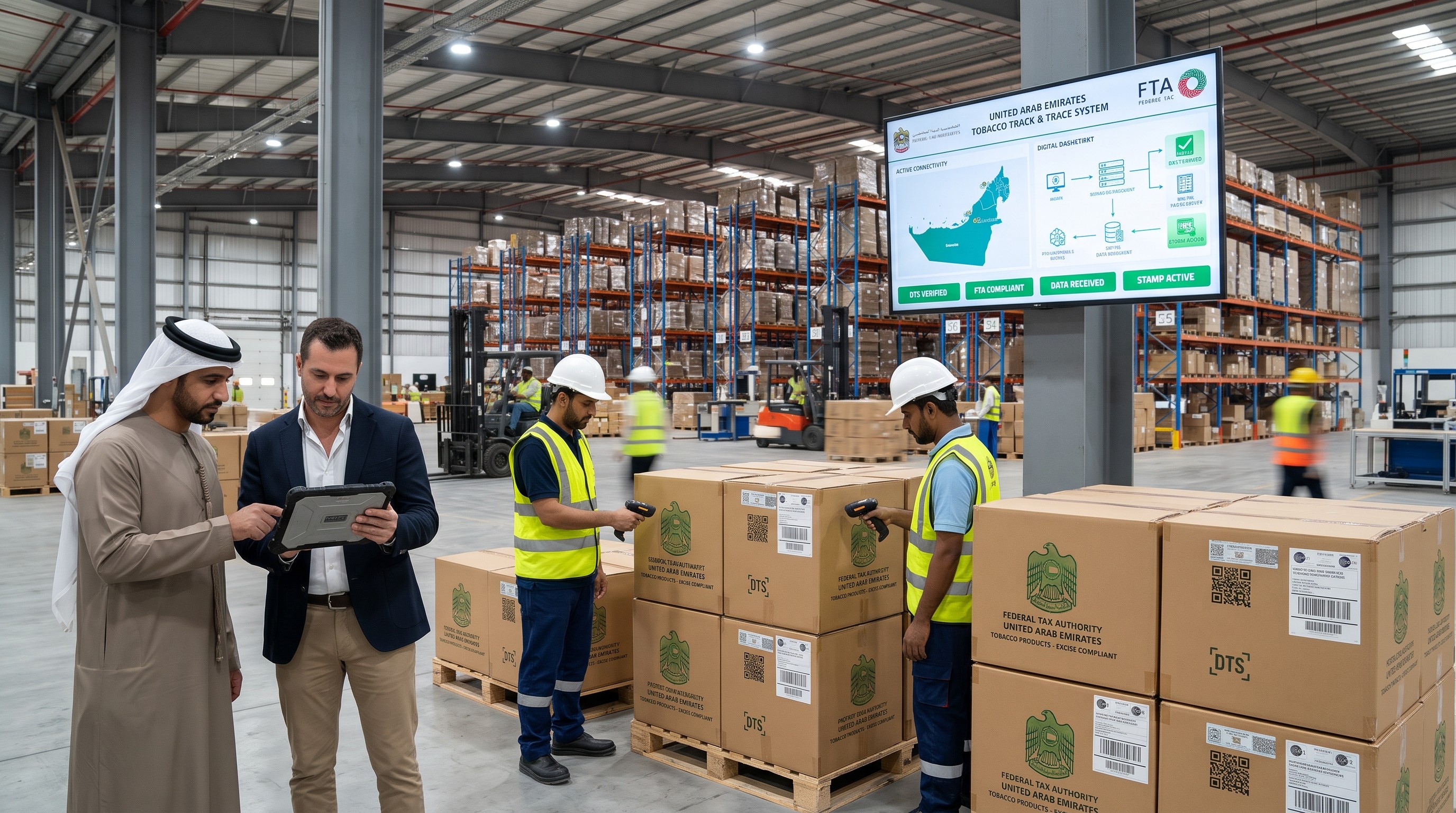
The Gulf Cooperation Council (GCC) has systematically implemented digital tax stamps and serialization requirements to curb illicit trade, protect tax revenues, and verify product authenticity across consumer goods. Within the region, the Kingdom of Saudi Arabia (KSA) and the United Arab Emirates (UAE) lead the enforcement of these traceability mandates, particularly in the tobacco sector.
For international tobacco manufacturers and local importers, selling into KSA and UAE requires full operational alignment with these regulatory bodies. This transition involves more than sticking a label on a pack; it changes physical packaging lines, warehouse logistics, and data exchange workflows.
Regulatory Frameworks in KSA and UAE
Both markets use digital tax stamps to monitor the movement of tobacco goods from the production facility or import hub through to retail distribution.
In the Kingdom of Saudi Arabia, the Zakat, Tax and Customs Authority (ZATCA) oversees the digital tax stamp scheme. Cigarettes and waterpipe tobacco imported into or manufactured in KSA must carry an activated tax stamp with an encrypted 2D data matrix code before customs clearance. Without this, goods cannot legally enter domestic distribution.
In the United Arab Emirates, the Federal Tax Authority (FTA) manages the "Marking Tobacco and Tobacco Products Scheme." Similar to KSA, physical products must feature digital tax stamps before being released for local consumption. Failure to comply leads to blocked customs clearance, substantial financial penalties, and the confiscation of shipments.
While the objective in both jurisdictions is consistent—securing excise tax collections and confirming origin—the operational workflows differ in data formatting, stamp order lead times, and customs release protocols.
Practical Operational Challenges on the Ground
Implementing tobacco track and trace in the Gulf involves specific day-to-day challenges for supply chain and IT teams:
- Physical Stamp Application: Digital tax stamps are high-security paper labels applied directly to individual unit packs. Packaging lines must integrate dedicated applicators capable of applying stamps at high speeds without tearing or misaligning them.
- Aggregation Hierarchies: Regulators expect visibility beyond individual packs. Operations must maintain an unbroken chain of custody through multi-level packaging: packs to cartons (bundles), cartons to master cases, and master cases to pallets. If a single pack identifier is lost or misread during aggregation, the entire parent shipping container fails verification.
- Data Synchronization with Regulated Systems: Tax stamps must be ordered, delivered, applied, activated, and linked to production batches. Data files documenting which codes are inside which shipping cases must be uploaded to the authority's designated system before goods arrive at border control.
- Cross-Border Customs Integration: For importers, customs clearance in both Saudi ports (like Jeddah Islamic Port or King Abdulaziz Port) and UAE entry points requires an electronic match between the shipment declaration and the registered tax stamps. Discrepancies cause direct demurrage costs and hold-ups in bonded warehouses.
Technical Architecture: Serialization to Activation
A compliant production run follows a clear, sequential path:
- Stamp Acquisition: The brand owner or importer orders serialized physical tax stamps from the authorized provider designated by ZATCA or FTA.
- Application and In-Line Verification: Stamps are applied to packs on the line. Optical camera systems scan the 2D code on each stamp to verify readability. Defective stamps are rejected and logged.
- Aggregation at Packing: Vision systems scan packs as they form cartons, recording parent-child data. The process repeats as cartons enter master cases, generating unique SSCC (Serial Shipping Container Code) labels for pallets.
- Event Reporting and Activation: The manufacturer transmits production event records (commissioning, aggregation, pack-to-carton relationships) to the national central repository, activating the physical stamps.
- Shipping and De-aggregation: Warehouses scan master cases during picking and shipping. Any change in the aggregation structure (e.g., breaking a pallet) must be recorded and updated in system records.
How Monovi TTOps Bridges the Compliance Gap
Monovi develops specialized services for tobacco manufacturers and importers who operate in KSA and UAE. Our TTOps service (Tobacco Track and Trace Operations), was built specifically to resolve the operational friction tobacco manufacturers and importers face when handling regulated markets.
TTOps sits between the operational shop floor (packaging lines, handheld warehouse scanners) and external government repositories, providing the required operational & technical support.
- Line and Warehouse Integration: The Track&Trace systems connect directly with physical industrial hardware—including automated vision inspection systems, print-and-apply applicators, and industrial handheld scanners. This means operators in the warehouse follow guided workflows for receiving, palletizing, and shipping without needing to manage raw serialization files manually.
- Import and Customs Alignment: For companies importing finished tobacco goods into the Gulf, Track&Trace systems help track incoming shipments against customs entries, ensuring stamp identifiers match clearance documents before arriving at the port. At Monovi we offer TTOps service to maintain your Track&Trace systems, keep track of your business and stay compliant with regulations.
- Traceability Continuity: In cases where shipments need re-packing or consolidation, Track&Trace systems manage the de-aggregation and re-aggregation steps, keeping the digital records clean and compliant with ZATCA and FTA guidelines.
Preparing Your Supply Chain for Gulf Traceability
Compliance with tobacco tracking and tracing in KSA and the UAE is not an isolated administrative task. It requires reliable synchronization between line-level packaging equipment, warehouse processes, and regulatory IT systems. Importers and manufacturers planning to supply these markets must address stamp procurement, aggregation accuracy, and data reporting early to avoid cargo impoundment and port delays. Monovi Track&Trace experts help your organization to operate in these countries, run Track&Trace systems and monitor product flow from shop-floor or warehouse to the customer.
Related
- What Does Monovi Offer for Tobacco Track&Trace Compliance?Discover Monovi TTOps solutions to eliminate regulatory risks from your commercial operations in the EU market and ensure uninterrupted data flow across your manufacturing and import processes. Entrust your technical and operational processes to our expert team and stay focused on your core business.
- Tobacco Tracking and Tracing in United KingdomUnderstand UK tobacco track and trace compliance, technical data flows, and how TTOps manages 24/7 operational support for manufacturers.
- Power BI Consulting Services: Transform Business Data into Strategic InsightsLearn how Power BI consulting services bridge the gap between fragmented field data and reliable operational decisions without corporate clutter.
Next step
Let us make the next step clear.