BlogMonovi
Data Engineering using Azure Databrics
Discover how Azure Databricks transforms enterprise data engineering and how Monovi DataOps brings maintainable, field-tested pipeline management.
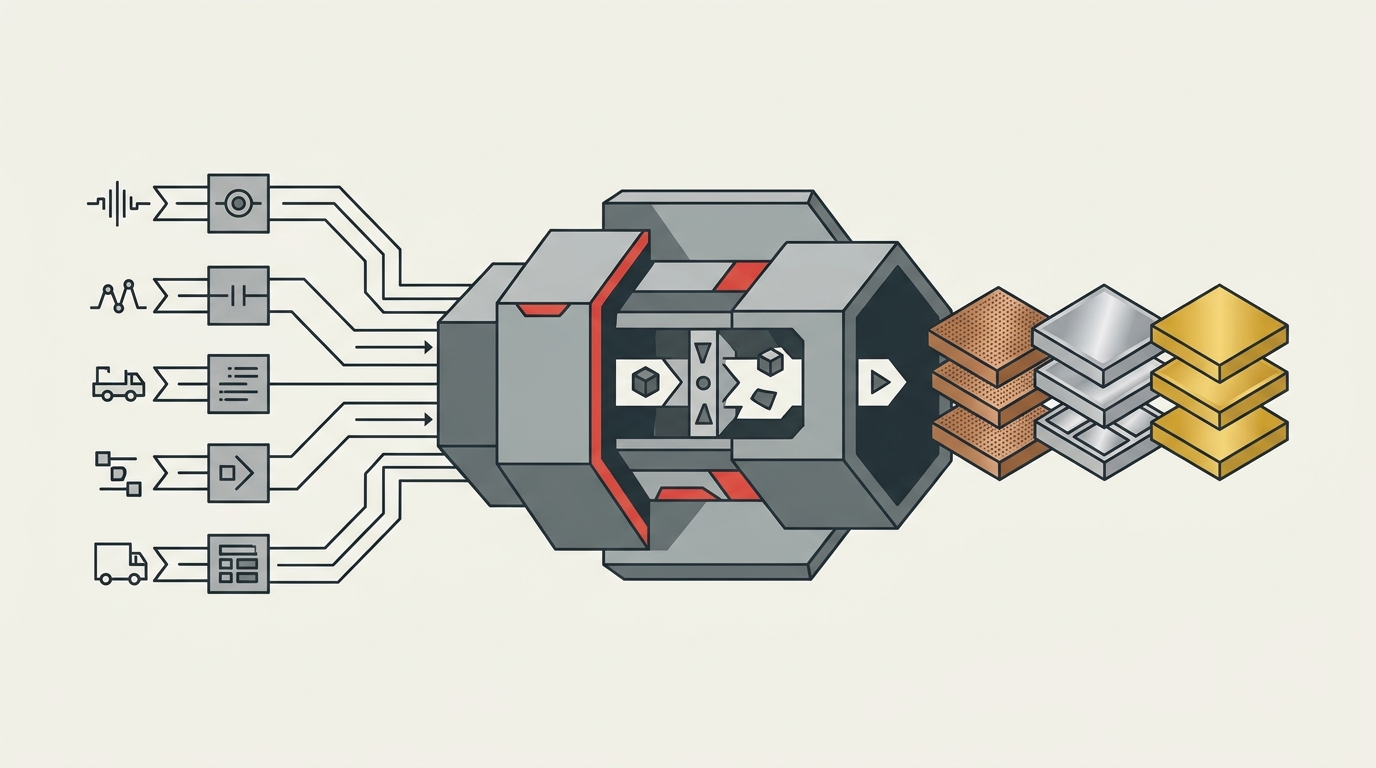
Modern enterprise data environments rarely suffer from a lack of raw input. Across industrial tracking, international supply chains, logistics networks, and commercial operations, businesses collect millions of transactional events every day. The actual challenge lies downstream: ingesting erratic formats, transforming records without bottlenecks, maintaining data integrity, and feeding analytical models reliably. Azure Databricks has established itself as an industry-standard engine to address these challenges, combining Apache Spark's distributed computing power with enterprise-grade cloud governance.
However, deploying scalable infrastructure is only half of the journey. Without structured operational engineering—encompassing automated testing, orchestration, deployment pipelines, and continuous monitoring—a powerful engine quickly deteriorates into brittle, opaque code. Translating cloud architecture into production stability requires treated discipline, bridging cloud services with grounded operational realities.
The Core Mechanics of Azure Databricks in Pipeline Engineering
Azure Databricks operates on a managed Spark cluster architecture tightly integrated with Microsoft Azure storage ecosystems, specifically Azure Data Lake Storage (ADLS) Gen2. Instead of maintaining physical infrastructure or manually configuring distributed nodes, engineering teams can configure auto-scaling compute pools tailored to specific workload profiles.
The foundation of modern engineering on this platform relies heavily on Delta Lake, an open-source storage layer that brings ACID (Atomicity, Consistency, Isolation, Durability) transactions to object stores. In practical terms, this eliminates several recurring failures in big data workflows:
- Write consistency: Prevent partial data commits during unexpected pipeline crashes.
- Schema enforcement: Prevent malformed source records from corrupting production tables.
- Time travel and versioning: Audit dataset revisions or rollback problematic ingestion cycles.
- Unified streaming and batch processing: Ingest streaming telematics or sensor records while handling bulk enterprise database dumps through identical abstractions.
By leveraging Delta Lake inside Azure Databricks, companies transition from disjointed raw directories into structured storage patterns capable of serving business logic cleanly.
Designing with the Medallion Architecture
A widely adopted architectural pattern on Azure Databricks is the multi-hop or Medallion Architecture. This framework organizes data processing into distinct stages, making troubleshooting, validation, and maintenance predictable.
1. Bronze Layer (Raw Ingestion)
Data enters the Bronze layer directly from upstream sources—such as Kafka streams, cloud storage landings, flat files, or API extractors—retaining its raw state. The goal here is rapid, append-only capture without heavy schema validation or mutation. It acts as an immutable audit log of incoming operational records.
2. Silver Layer (Cleaned and Conformed Data)
In the Silver tier, raw records are cleansed, typed, enriched, and joined with structural reference data. Structural schemas are enforced, null values are handled, and deduplication logic runs. In logistics or production contexts, this is where tracking timestamps are normalized, addresses are matched against geographical references, and transactional IDs are validated.
3. Gold Layer (Business Aggregation and Modeling)
The Gold layer presents curated, dimensional datasets structured for consumption. Business intelligence dashboards, analytics engines, operational reporting systems, and machine learning features query these finalized tables. Calculations here are aggregated, consistent, and strictly partitioned for performance.
Where Infrastructure Meets Discipline: Monovi DataOps
Standing up Azure Databricks clusters and writing notebooks is relatively straightforward. The true engineering challenge surfaces when pipelines run continuously in high-throughput environments where missing data directly disrupts day-to-day operations. When supply chains, customs tracking, and cross-border shipments depend on timely data, pipeline failure is an operational emergency.
This is where Monovi DataOps steps in. Grounded in building production software for field logistics, tracking and tracing, and regulated operations, Monovi approaches data engineering not as academic experimentation, but as critical infrastructure maintenance. Monovi DataOps integrates software engineering rigor into the Azure Databricks environment through:
- Automated CI/CD for Data Pipelines: Moving code out of isolated notebooks into tested, modular Python or Scala libraries managed through source control and automated deployment pipelines.
- Proactive Monitoring and Quality Assertions: Implementing real-time validation checks across Bronze, Silver, and Gold transformations to flag silent data drift, dropped records, or latency spikes before business stakeholders notice.
- Infrastructure Optimization and Cost Governance: Right-sizing Databricks cluster policies, optimizing job clusters versus interactive compute, and tuning Delta Lake partitioning to prevent unnecessary cloud spend.
- Managed Engineering Teams: Providing dedicated engineers who manage pipeline operations, troubleshoot edge-case failures, and maintain uninterrupted uptime for mission-critical data flows.
Rather than treating data as an abstract layer, Monovi DataOps treats each pipeline as an extension of physical operational systems, ensuring metrics accurately reflect real-world activity.
Practical Steps to Production Readiness
Teams moving their workloads to Azure Databricks should anchor their development on concrete engineering principles:
- Decouple compute from storage: Keep your data securely inside managed ADLS Gen2 containers, allowing ephemeral compute clusters to spin up and terminate strictly when jobs execute.
- Avoid monolithic notebooks: Break complex workflows into modular, version-controlled scripts that can be unit-tested locally and deployed automatically.
- Implement explicit partition strategies: Over-partitioning small datasets degrades query performance via metadata overhead; under-partitioning large datasets leads to memory bottlenecks. Profile your data volume before locking partition keys.
- Establish clear access policies: Leverage Unity Catalog within Azure Databricks to enforce central data governance, credential isolation, and audit trails across environments.
Conclusion
Azure Databricks provides the computation, scalability, and structural performance required to process massive operational datasets. However, reliable enterprise data delivery depends on consistent operational discipline. Combining modern platform architecture with Monovi DataOps ensures that pipelines do not merely process records, but maintain continuous data integrity, clear visibility, and tangible business utility.
Related
- What Does Monovi Offer for Tobacco Track&Trace Compliance?Discover Monovi TTOps solutions to eliminate regulatory risks from your commercial operations in the EU market and ensure uninterrupted data flow across your manufacturing and import processes. Entrust your technical and operational processes to our expert team and stay focused on your core business.
- Tobacco Track and Trace in KSA and UAEA practical guide to tobacco track and trace compliance in KSA and the UAE, covering tax stamp rules, serialization, and Monovi TTOps support.
- Tobacco Tracking and Tracing in United KingdomUnderstand UK tobacco track and trace compliance, technical data flows, and how TTOps manages 24/7 operational support for manufacturers.
Next step
Let us make the next step clear.